
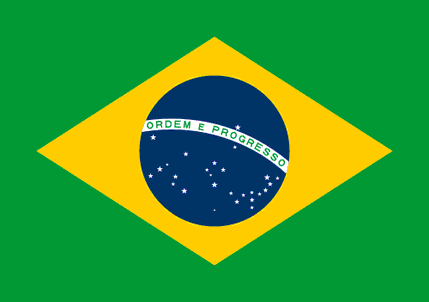
Brazil Flag
Price range: R400,00 through R860,00
The Brazil flag, available as a full-size flag in 180 x 120cm and 90 x 60cm, or as a desk flag in packs of 10. Digitally printed on both sides onto durable polyester, so the design reads correctly from either side.
Priced from R400, with delivery anywhere in South Africa. Need a custom or branded flag instead? Request a quote.
Description
The Brazil flag is available from Flags Online in full-size and desk formats, printed on both sides and made to last outdoors.
The Flag of Brazil
Are you curious to know about the history, artistry, and symbolism behind Brazil's national flag ? Look no further! In this blog, we will take you on a fascinating journey through the evolution of Brazil's flag, from its colonial roots to the present day.
Discover the meticulous crafting process and the debates surrounding design alterations. Learn about the protocols associated with the Brazilian flag, including the right way to fold it and the anthem dedicated to its honor.
We'll also delve into other notable flags in Brazil's history and explore what makes Brazil's flag truly unique. Uncover the hidden meanings behind the colors, constellation, and stars on the flag while discovering fun facts along the way. Get ready for an immersive exploration of Brazil's national identity symbolised by its captivating flag.
Unfurling the History of Brazil's Flag
Unfolding the fascinating history of Brazil's flag reveals its intricate design and profound symbolism. Over time, this national symbol has gone through various evolutions, reflecting the changing identity and values of Brazil.
The colors and symbols on the flag hold deep significance , representing ideals such as order and progress. As we delve into the history, we discover interesting facts and trivia about the flag, which has become an emblem of Brazil's rich heritage, vibrant culture, and starry sky.
The Dawn of the Flag: Colonial Brazil (1500–1815)
During the colonial period in Brazil, which began in 1500, the country's flag came into existence. As a Portuguese colony, Brazil's flag initially featured the green and yellow colors associated with the Portuguese royal family.
The design consisted of a white cross on a green background, with the Portuguese coat of arms included. In 1815, when Brazil became a kingdom under Portuguese rule, the flag underwent some modifications.
The crown was added to the center of the cross, and a blue circle with stars representing the Southern Cross constellation was placed behind it. This version of the flag remained in use until Brazil gained independence from Portugal in 1822.
After independence, Brazil adopted a new flag design that incorporated elements representing its newfound national identity.
Transition to the United Kingdom of Portugal, Brazil, and the Algarves (1815–1822)
During the period of 1815-1822, under the United Kingdom of Portugal, Brazil, and the Algarves, Brazil adopted its first version of the flag. This flag featured a green field with a yellow diamond in the center, representing the ruling House of Braganza. Inside the yellow diamond was a blue circle with a white band across it, symbolizing the royal family's ties to Portugal.
The blue circle contained several stars, including one representing Brazil and others representing different regions within the kingdom. This flag design remained in use until 1889 when Brazil became a republic and adopted its current flag design.
Rise of the Empire of Brazil (1822–1889)
The flag of Brazil was officially adopted on November 19, 1889. Its design has remained relatively unchanged since its inception. The flag consists of a green field with a yellow diamond in the center. Inside the diamond is a blue circle adorned with 27 white five-pointed stars.
These stars represent the 26 states of Brazil and the Federal District. The green field symbolizes the House of Braganza, the ruling family of Brazil during its empire period. Additionally, the yellow diamond symbolises the country's wealth and resources.
Birth of the Republic of Brazil (1889–Present)
After the overthrow of the monarchy and the establishment of the Republic of Brazil on November 19, 1889, the current design of the Brazilian flag was adopted. The flag features a green field with a large yellow diamond in the center, symbolizing Brazil's resources and wealth. Inside the diamond is a blue circle containing 27 stars, representing each state of Brazil and the Federal District.
Within the blue circle, there is a white band with the national motto "Ordem e Progresso" (Order and Progress) written in green letters. The design of the Brazilian flag was created by Raimundo Teixeira Mendes and Miguel de Lemos, with contributions from Manuel Pereira Reis and Décio Villares. The flag was first hoisted on November 19, 1889, by President Deodoro da Fonseca during the proclamation of the republic.
The Artistry Behind the Flag
The Brazilian flag's design is steeped in history and meaning. The colors and shapes used in the flag hold significant symbolism. Throughout Brazil's history, the flag has evolved, representing the country's identity and values. It is a reflection of Brazil's diverse culture and rich heritage.
The flag showcases a green field representing the ruling family during the empire period, with a yellow diamond symbolizing wealth and resources. Inside the diamond, a blue circle holds 27 stars, representing Brazil's states and Federal District. The artistry behind Brazil's flag exemplifies the nation's pride and unity.
Top 10 frequently asked questions about the Brazil flag:
What do the colors of the Brazil flag symbolize?
The green represents Brazil's lush forests, the yellow symbolizes its abundant resources, and the blue stands for the sky and oceans.
When was the Brazil flag officially adopted?
The current flag design was adopted on November 19, 1889, marking the transition to a republic.
Is the Brazil flag unique in design?
Yes, the flag's unique design of a green field with a yellow diamond and blue circle is distinct to Brazil.
What is the meaning of the blue circle on the flag?
The blue circle contains 27 white stars, each representing a Brazilian state and the Federal District.
What is the significance of the yellow diamond?
The yellow diamond symbolizes Brazil's wealth in resources and its aspirations for a bright future.
Is the Brazil national anthem a source of pride?
Absolutely, the national anthem is a source of immense pride, embodying the nation's history and values.
What is the national anthem's connection to the flag?
The national anthem and the flag are both expressions of Brazil's identity and patriotism.
Are there any specific guidelines for displaying the Brazil flag?
Yes, there are protocols for how the flag should be displayed, particularly during national ceremonies.
What emotions does the Brazil flag evoke among its citizens?
The flag evokes feelings of patriotism, unity, and a shared commitment to Brazil's progress.
Has the Brazil flag design changed over time?
While the core design remains consistent, slight changes have been made to the arrangement of stars in the blue circle.
Brazil Flag Sizes and Pricing
- 180 x 120cm — R860
- 22 x 15cm Desk Flag (10 units) — R800
- 10 x 15cm Desk Flag (10 units) — R650
- 90 x 60cm — R400
Material and Construction
Made from 100% polyester bunting material and digitally printed on both sides. Hemmed all around with two rows of stitching and finished with a polyester webbing heading. Rope and toggle for hoisting included.
Supplied in packs of 10. Printed on both sides onto polyester and supplied with a black plastic stick and removable base — take the base off and it doubles as a hand waving flag.
Ordering and Delivery
Every Brazil flag is printed to order and dispatched from our Gqeberha (Port Elizabeth) and Johannesburg branches, with courier delivery nationwide. Bulk and school orders are welcome — contact us for volume pricing on quantities of 10 or more.
Additional information
| Weight | N/A |
|---|---|
| Size | 10 x 15cm Desk Flag (10 units), 180 x 120cm, 22 x 15cm Desk Flag (10 units), 90 x 60cm |
Only logged in customers who have purchased this product may leave a review.


Reviews
There are no reviews yet.